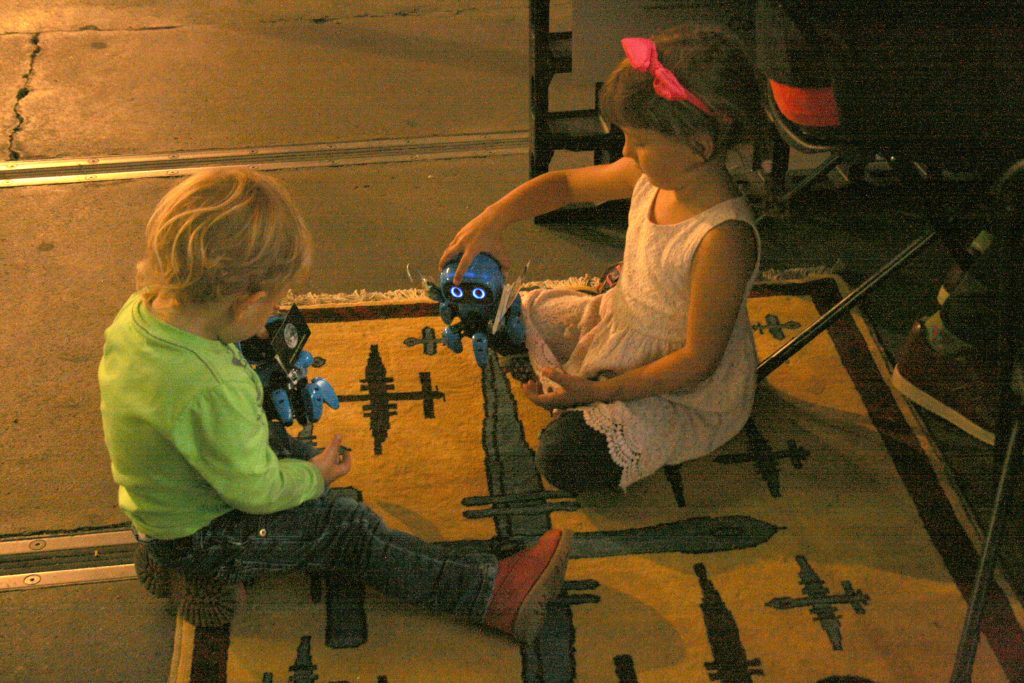
Project Home aims to redefine this almost utopian narrative through collecting and sharing personal stories of people who relocated by choice or necessity or struggled with the traditional concept of home for any other reason. By that, we hope to inspire others to question some of the limiting beliefs and recognize their own unique way “to home”.
In a world where estimated number of international migrants in 2019 reached 272 million, 70.8 million people have been forcibly displaced and 37,000 people are forced to flee their homes every day due to conflict or persecution, 150 million people are homeless, while another 1.6 billion people lack adequate housing, the traditional concept of a home as a physical space, a place where one lives permanently, were born at or where their relatives are seems very unrealistic and socially exclusive. Same applies for an idea of a home where one is loved, respected and cared for when up to 1 billion children aged 2–17 years, have experienced physical, sexual, or emotional violence or neglect in the same year.
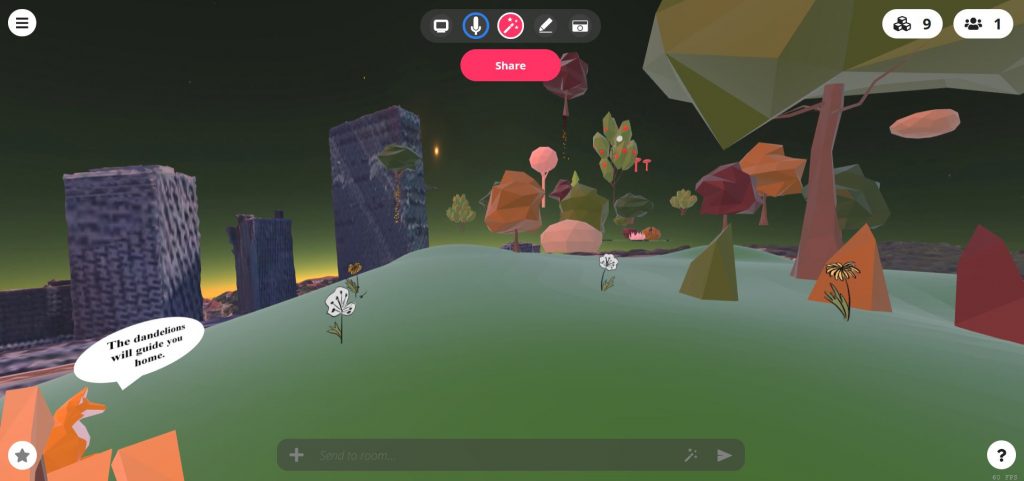
How to Experience Project Home: There are several possibilities of experiencing this project, separately, as well as combined, depending on a platform and place. Users can either access the website as a standalone project, to read about the concept and explore this utopic alternate world hovering above Vienna, consisting of others’ stories and thoughts about home. Second kind of experience is through the real physical places that interviewed people mentioned and marked with dandelion stickers. After scanning the QR code on the sticker, the users are redirected to the online page
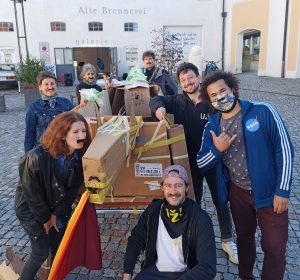
Team Members: Esma Bosnjakovic, Max Haarich, Nicole Schanzmeyer, Barbora Horská
Project Home Vienna was developed in the American Arts Incubator Program under guidance of Rashin Fahandej.
For further info please visit the website of Project Home Vienna.
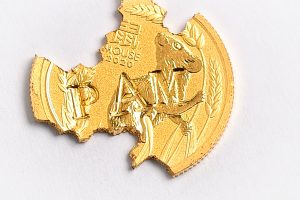
Money Mouse is a multi-modal character developed for and with the Punch Agathe theatre project. It reveals and exaggerates the reckless greed in today’s financial markets.

The Money Mouse project was started by accumulating 12 fine gold coins in an investment fund. These coins were refined by a gold smith and auctioned on ebay. The auction returns were invested by a cryptohopper trade bot that obeyed Korean pump and dump groups. The generated profits were invested into “care packages” filled with legally available things like empty AK47 ammo or low radioactive Uranium. These care packages were symbolically sent into crisis regions to fuel the conflict further. The growing crises of the world would increase the value of our crisis sensitive gold coin stock to accelerate a spiral of growing returns and crises until Money Mouse would destroy the world and own all the money.
Money Mouse was also realized as an 8 meter tall inflatable puppet that would eat giant gold coins in public. The puppet became an activist fighting against greed and for the student rights in the Hungarian SZFE-Protests.
“Art helps us to reflect” is a common phrase. This hand made fake Afghan rug demonstrates this sadly. For centuries these Afghan rugs used to reflect what surrounded the people: in the beginning they showed flowers, animals and mountains. Later they showed trains and concrete buildings. Today they show autonomous drones patrolling the sky.

AI Telling the Truth /2020
This synthetic video is playing with our notion of truth. We consider truth the solid foundation of our knowledge and beliefs. When you don’t tell the truth, you can lose friends and even your life. Nevertheless, there are reasons to doubt that truth really exists in the way we imagine it. The German Wikipedia entry for truth starts with the warning “the title of this article is ambiguous” and goes on “the notion of truth is used in different contexts and is framed differently”. The video AI telling the truth plays with this uncertainty about the meaning of truth by conveying contradicting messages through an AI generated deepfake host.
“If Henry Ford had Asked the People what they Wanted…” is a citizen science experiment that sheds new light on a famous quotation by Henry Ford. He is known for having said: If I had asked people what they wanted, they would have answered “faster horses”. As we all know, Henry Ford did not build faster horses, but cars. With this invention he and other entrepreneurs became incredibly rich. This quote is still very popular today, especially among young entrepreneurs. It is often abused to justify the aggressive marketing of products that nobody had asked for before. Especially in times of climate crisis it could be valuable to critically reflect on such a technocratic mindset.
Where did Mr. Ford get the right to push the production of millions and millions of these one to two ton vehicles? His machines have made walking in the city a danger of life and they have moved a large part of our fossil fuels from the ground into the air we breathe. How different would our world be today, how much better could our climate be, how many lives could have been saved if Henry Ford had simply listened to the people? What if Henry Ford had actually tried to breed faster horses?
Modern scientific findings, e.g. from bioengineering and synthetic biology, now give us a glimpse into what we could have achieved if we had used the millions of talented engineers and the billions of public subsidies to bioengineer horses for a whole century. Perhaps everyone could have their own sustainable mobility concept in the garden today. A super-fast horse that, depending on its breed, has huge pouch pockets for transporting food, or wings for crossing oceans, or simply a spacious and warm interior for the relaxed enjoyment of cherry brandy.

In a citizen science process we developed the first prototypes of such literally alternative mobility concepts at Kunstverein Ebersberg. Together with Ebersberg’s exhibition visitors and local residents, we collected ideas and built prototypes only from waste paper – cheap, but fun, and insightful.
Forget Cryptokitties, -punks, -kongz, -dongs, -whatever – here come the cryptomustaches! They come in a limited edition of 7×6+1 because not everyone can wear a mustache :-{)
Cryptomustache collection on opensea.io
Fine art is fine but kitsch warms your soul. Kitsch is collection of NFTs to make you feel home in the metaverse. We all know these motifs. We have seen them a thousand times in the living room of our auntie and in the living room of all other aunties. I went to my auntie, photographed and minted them, so they can also decorate your auntie’s living room in the metaverse. There are approximately 1 Billion aunties on this planet. So I minted one copy dedicated to each selling one at a time.
The Kitsch collection is a comment on the predominant futuristic style of NFT artworks, which are meant to be the decoration of the upcoming Metaverse. The Metaverse shall be a place for everyone, but not everyone feels comfortable with the futuristic art recently offered on NFT market places. The Kitsch collection worships the non-elitest art that potentially billions of people could own and identify with.
At the same time it is a statement on NFTs promise to create ownership and scarcity in the digital space. This attempt seems to fire back to erode the idea of copyrights in the physical world. The distinction between copyright infringement and artistic expression is becoming less clear and more arbitrary. As of today, it is forbidden to sell a scan of someone else’s painting. Yet, it would be allowed to sell a photo of a living room, where that painting is visible somewhere in the background. The Kitsch collection tries to capture the exact border case, the photo of the artwork in a physical frame, where the original artwork is neither directly copied nor trivialized as a background element. As of today, nobody knows how to handle this case. Hopefully humanity will decide in favor of altruism. The wisest thing humanity ever invented was not to possess but to share.
π Constitution is a collection of NTFs that manifest the tension of investing. They pair the hope for unimaginable profits with the fear of losing everything.
I listed two copies of the constitution of Užupis for auction as NFT art on opensea.io for the price of 3,141,592,653,589.7932 Ethereum Coins (that’s 𝝅 trillion ETH and equals around 5 quadrillion USD). This sum of money does not exist. Currently, there are only about 120 million ETH and only 1.2 quadrillion USD in circulation.
In order to enable the purchase of these NFTs I listed them as reverse auctions. The price is rapidly declining from 𝝅 trillion ETH until someone buys the NFT. If nobody buys them, the price will decline for 𝝅 years. On 20 April 2024 the most expensive thing in the world will have lost all its value.
NFT Certificates are NFTs that function as financial products. In contrast to all other financial products, our NFT Certificates can protect you from earning money. At the same time, they make it possible for investors to gain profits which are out of reach for any other financial product. Normal leverage certificates traded on the stock market usually promise a profit factor between two and a maximum of ten, we guarantee profit factors up to 1,000. How is this possible?
In cooperation with crypto pioneer Gleb Divov and his colleagues from the Užupis CryptoArt Hub “Digital / Kalnas” we developed NFT-based mechanisms that effectively protect investors against profits — aligned with the spirit of the Republic of Užupis. We have created new NFTs for this purpose, which, similar to warrants known from stock trading, allow a bet on the amount of the auction revenue.
For example, we have issued a “LONG Certificate” that you can buy for 0,314 ETH. With this certificate you will be betting that the black copy of the constitution will receive a minimum bid of 314 ETH (approx. USD 5 million) until the end of the auction in more than three years. If the constitution does not achieve this price, you earn nothing. But if the constitution achieves that price, you will receive a perverse premium of 314 ETH. That would be thousandfold of your 500-USD-invest within 𝝅 years (yes, a thousandfold).
This is easily possible because we own both, the certificate as well as the artworks you bet on. The premium of the certificate would be paid directly from the auction revenues of our artwork. and protect ourselves from absurd profits. If we managed to auction off the black copy of the constitution for the enormous sum of 314 ETH, we would instantly transfer the 314 ETH to the holder of the LONG certificate.
Charitree is a charity NFT project with the potential to turn the environmentally destructive NFT technology into the savior of the planet. It is based on the true story of the Tree that Owns Itself and is also a statement on plant rights.
Only the tree that owns itself owns all rights to its images. Only trees should benefit from their sales. Therefore, any profits from the sales and aftersales will be donated to www.onetreeplanted.org for planting trees.
One tree costs around 0.0005 ETH to be planted and it can absorb around 1,000 Kg of carbon in its lifetime. By purchasing one photo for 0.02 ETH you will help to remove 40 tons of carbon from the atmosphere.
At the moment, there is an estimated amount of 2.966.000.000.000 tons of CO2 in the atmosphere. If we manage to sell all the 74.150.000.000 copies of this picture, all the CO2 will be absorbed.
Charitree collection on opensea.io